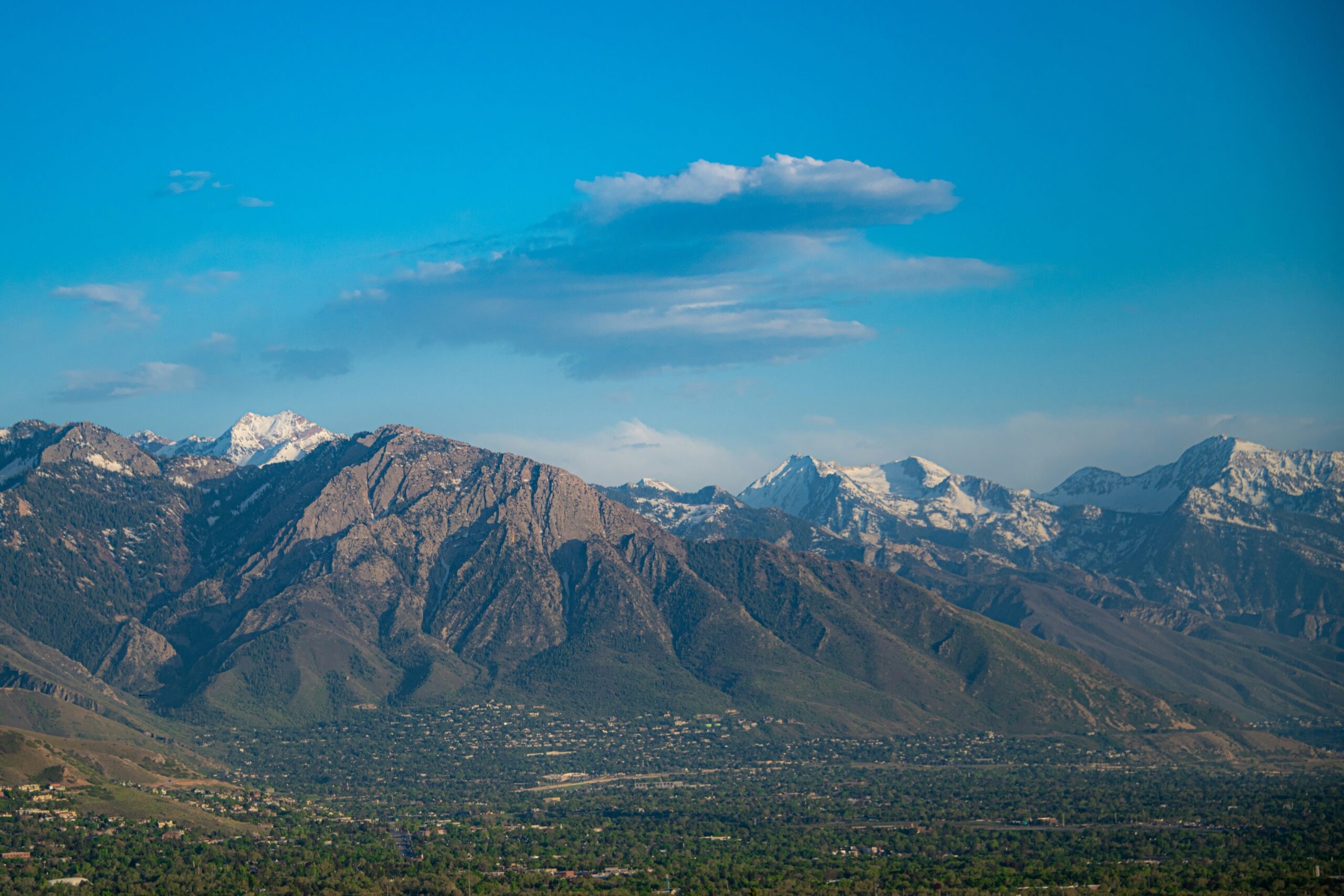
Living in Utah means enjoying beautiful mountain views, four distinct seasons, and easy access to outdoor recreation. It also means living in an active seismic zone that many residents don’t fully appreciate. The Wasatch Fault runs through some of the most densely populated areas of Utah, making earthquake preparedness—including insurance coverage—an important consideration for homeowners.
If you’ve ever wondered whether earthquake insurance is necessary for your Utah home, this guide will help you understand the risks, what standard home insurance covers (and doesn’t cover), and how to evaluate whether additional earthquake coverage makes sense for your situation.
Understanding Utah’s Earthquake Risk
Utah sits along the Wasatch Fault, a 240-mile-long fault line that runs roughly north-south through the state, passing through or near major population centers including Brigham City, Ogden, Salt Lake City, Provo, and Nephi. Scientists estimate there’s a 43% probability of a magnitude 6.75 or larger earthquake occurring along the Wasatch Fault in the next 50 years.
While Utah experiences hundreds of small earthquakes annually (most too small to feel), the state is overdue for a significant seismic event. The last major earthquake on the Wasatch Fault occurred roughly 350-400 years ago, and geologists believe the fault typically produces major quakes every 300-400 years.
The most recent reminder of Utah’s seismic activity came in March 2020, when a magnitude 5.7 earthquake struck near Magna, causing damage throughout the Salt Lake Valley. While not catastrophic, this earthquake damaged thousands of homes and caused residents to take Utah’s earthquake risk more seriously.
Key Areas of Higher Risk: Properties located near the Wasatch Fault—particularly in Salt Lake County, Davis County, Utah County, and Weber County—face the highest earthquake risk. However, ground shaking from a major earthquake would affect a much wider area.
What Your Standard Home Insurance Covers (and Doesn’t Cover)
Here’s something many Utah homeowners don’t realize: standard homeowners insurance policies do not cover earthquake damage. Earthquake damage is specifically excluded from typical home insurance policies, which means if a significant earthquake damages your home, you’re responsible for all repair costs unless you’ve purchased separate earthquake coverage.
Standard home insurance typically covers damage from:
- Fire (including fire following an earthquake, though this can be complicated)
- Wind and hail
- Theft
- Vandalism
- Water damage from burst pipes
- Liability claims
But it specifically excludes:
- Earthquake damage
- Flooding
- Landslides and earth movement (unless specifically caused by a covered peril)
This means if an earthquake cracks your foundation, breaks your windows, damages your chimney, or causes your home to collapse, your standard home insurance provides no coverage for repairs.
What Does Earthquake Insurance Cover?
Earthquake insurance is typically offered as an endorsement (add-on) to your existing homeowners insurance policy or as a separate policy. It generally covers:
Dwelling Coverage: Repairs to your home’s structure, including the foundation, walls, roof, and attached structures like garages.
Other Structures: Detached structures on your property such as sheds, fences, and detached garages.
Personal Property: Your belongings inside your home, including furniture, clothing, electronics, and appliances.
Loss of Use: If your home is uninhabitable after an earthquake, this coverage pays for temporary living expenses like hotel costs and meals.
Important Exclusions: Earthquake policies typically don’t cover:
- Damage to landscaping, driveways, patios, or swimming pools (though some policies may offer limited coverage)
- Masonry veneer on wood-frame buildings (sometimes excluded or subject to sublimits)
- Damage to land or land-related issues
Understanding Earthquake Insurance Deductibles
Earthquake insurance deductibles work differently from standard home insurance deductibles. Rather than a flat dollar amount like $1,000 or $2,500, earthquake deductibles are typically percentage-based, ranging from 5% to 25% of your dwelling coverage amount.
For example, if your home is insured for $400,000 and you have a 10% earthquake deductible:
- Your deductible would be $40,000
- The insurance would pay for covered damage exceeding $40,000
- You’d be responsible for the first $40,000 of repairs
These high deductibles significantly affect the value proposition of earthquake insurance. The policy primarily protects against catastrophic loss rather than moderate damage.
Why such high deductibles? Earthquake damage is difficult to predict and can affect thousands of homes simultaneously. High deductibles keep premiums more affordable while ensuring the insurance is available for major losses that would otherwise be financially devastating.
How Much Does Earthquake Insurance Cost in Utah?
Earthquake insurance costs vary considerably based on several factors:
Home Location: Properties closer to the Wasatch Fault generally pay higher premiums.
Home Construction: Older homes, unreinforced masonry buildings, and homes on unstable soil cost more to insure. Newer homes built to modern seismic codes cost less.
Home Value: Higher dwelling coverage limits result in higher premiums.
Deductible Selection: Choosing a higher deductible (15% or 20%) reduces your premium, while lower deductibles (5% or 10%) cost more.
Construction Type: Wood-frame construction typically costs less to insure than masonry or other materials.
For a typical Utah home valued at $400,000:
- A policy with a 10% deductible might cost $800-$1,500 annually
- A policy with a 15% deductible might cost $500-$1,000 annually
- A policy with a 20% deductible might cost $300-$700 annually
These are general estimates—actual costs vary significantly based on the specific factors mentioned above.
Should You Buy Earthquake Insurance? Key Considerations
Deciding whether earthquake insurance is worthwhile requires evaluating several factors:
Your Financial Ability to Absorb Loss: Could you afford to repair or rebuild your home after a major earthquake? If the answer is no, earthquake insurance provides crucial protection despite the high deductible.
Your Home’s Value and Your Equity: If you have significant equity in your home, you have more to lose in an earthquake. A paid-off $500,000 home represents substantial wealth that would be lost without earthquake coverage.
Mortgage Requirements: Most lenders don’t require earthquake insurance, even in high-risk areas. However, if you have a mortgage and your home is damaged beyond habitability, you’d still owe the mortgage payments while also paying for temporary housing.
Your Risk Tolerance: Some homeowners prefer the peace of mind that comes with coverage, even if they never use it. Others are willing to accept the risk to avoid the premium cost.
Proximity to the Wasatch Fault: If your home is in Salt Lake, Davis, Utah, or Weber counties, your earthquake risk is higher than in other parts of Utah.
Age and Construction of Your Home: Older homes, particularly those built before modern building codes, face higher damage risk and may benefit more from coverage.
Deductible Affordability: The high percentage-based deductibles mean you’ll pay substantial out-of-pocket costs even with insurance. Consider whether you could afford your deductible amount in addition to the premium costs.
Alternatives and Supplements to Earthquake Insurance
If earthquake insurance seems too expensive or the deductible too high, consider these alternatives:
Emergency Fund: Build a dedicated savings account for potential earthquake repairs. If you save the annual premium costs over several years, you’ll have funds available for repairs.
Home Retrofitting: Investing in seismic retrofitting—such as bolting your home to its foundation, reinforcing cripple walls, or bracing water heaters—can reduce damage and may qualify you for insurance discounts.
Lower Deductible Options: Some insurers offer buy-down options that allow you to reduce your percentage deductible by paying higher premiums.
Utah Earthquake Authority: Check if there are any state-sponsored programs or resources available for earthquake insurance or mitigation assistance.
Making Your Home More Earthquake-Resistant
Whether or not you purchase earthquake insurance, taking steps to make your home more earthquake-resistant can reduce potential damage:
- Foundation Bolting: Secure your house to its foundation with bolts
- Cripple Wall Bracing: Reinforce short wood-framed walls in crawl spaces
- Secure Heavy Items: Bolt tall furniture to walls and secure water heaters
- Flexible Utility Connections: Install flexible gas and water connections that can move during shaking
- Reinforce Masonry: Strengthen chimneys and unreinforced masonry walls
- Automatic Gas Shut-off Valve: Install a seismic shut-off valve on your gas line
Many of these improvements may also qualify you for reduced earthquake insurance premiums.
The Bottom Line on Earthquake Insurance in Utah
Earthquake insurance is not right for everyone, but it’s worth serious consideration for Utah homeowners, particularly those living near the Wasatch Fault. The decision ultimately comes down to your financial situation, risk tolerance, and ability to recover from a major loss.
Consider this perspective: The premium you pay for earthquake insurance buys protection against a low-probability but high-impact event. If a major earthquake never occurs during your homeownership, you’ll have paid premiums without receiving benefits—but if it does occur, the coverage could prevent financial devastation.
Get Personalized Guidance on Earthquake Coverage
Deciding whether earthquake insurance makes sense for your specific situation requires looking at your home’s characteristics, location, value, and your personal financial circumstances. We help Utah homeowners evaluate their earthquake risk and find appropriate coverage options at competitive rates.
Contact us today to discuss earthquake insurance for your home. We’ll review your current coverage, explain your options, and provide quotes so you can make an informed decision about protecting your most valuable asset.